Easy Sourdough Rye Bread Recipe
Bake flavorful sourdough rye bread with this easy recipe. Perfect with salmon or soup, it’s dense yet balanced with rye and wheat flour!

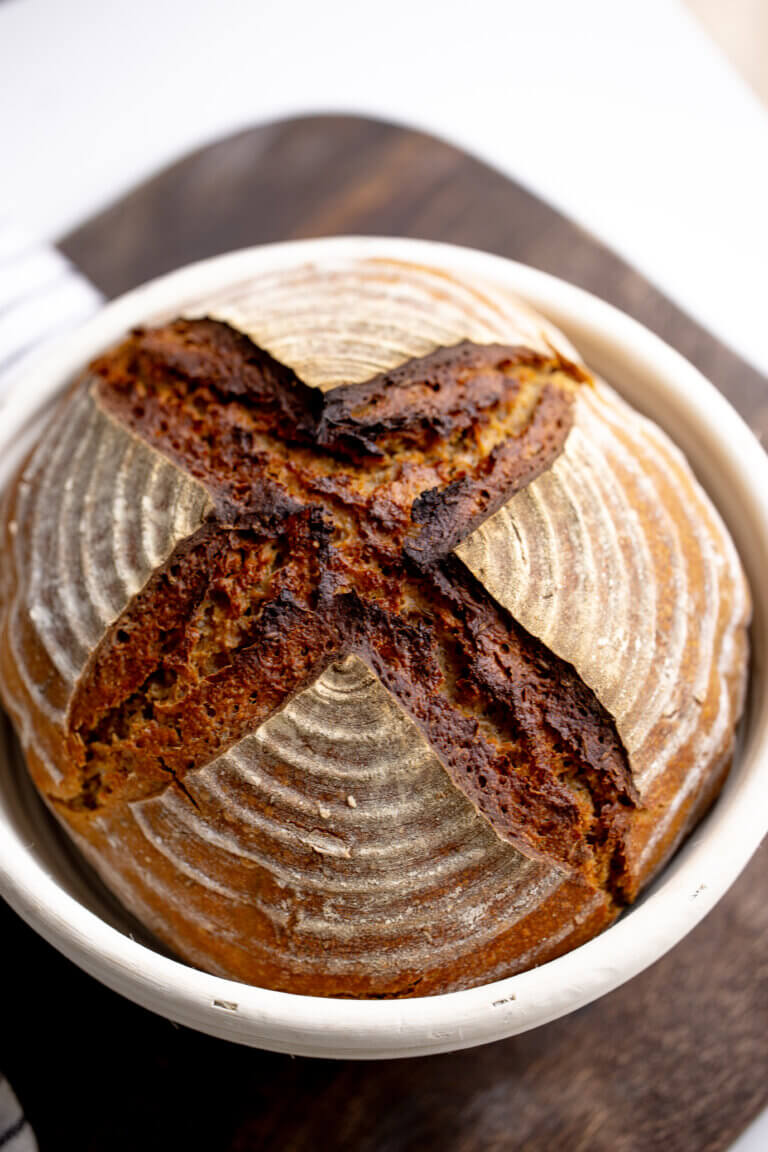
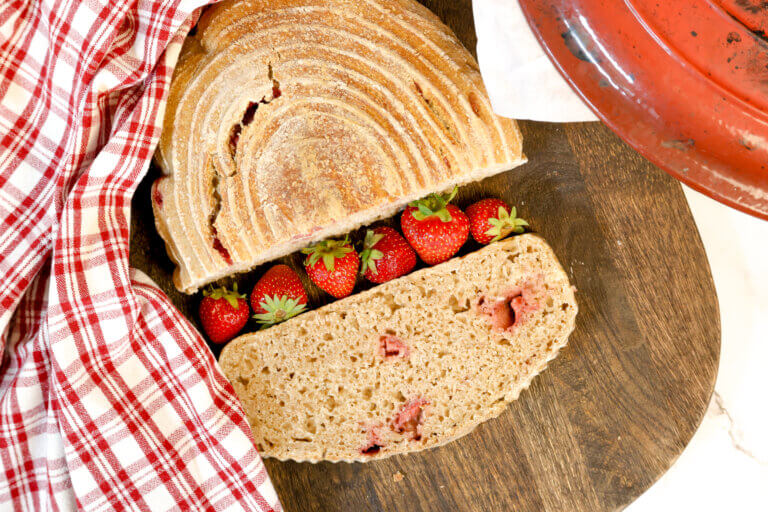
This homemade rye sourdough bread is a delicious way to shake up your sourdough game. If you’ve been making wheat flour bread for a while, this rye bread will be a lot darker and denser. It goes really well with smoked salmon or as a side to a hearty soup. I love slathering a slice with butter, sprinkling with salt and enjoying it as a snack. Mixing rye flour with wheat flour is key to getting a loaf that is denser than normal, but not super dense and compacted.
Why You’ll Love This Recipe
- Yummy, Hearty Flavor – The mixture of rye flour and whet flour create a nutty taste that hits the sweet spot between being too dense and just dense enough. It’s perfect for topping with butter and sea salt or serving with smoked salmon and warm soup.
- Easy Baking – With a lively sourdough starter, you mix, knead, shape, and pop it in a Dutch oven. Simple steps mean you’ll have two bakery-style loaves without breaking a sweat.
- Crunchy Outside, Chewy Inside – Knead it soft, bake it hot, and you’ll get a golden, crispy crust with a tender, not-too-heavy middle that makes every bite a total treat.
Ingredients
Rye Bread Flour – This flour is what adds a robust, earthy flavor and dense texture to your bread.
Wheat Bread Flour – Made from high-protein hard wheat, this flour provides structure and lift. It balances the rye with a mild, nutty sweetness and a lighter crumb.
Water – use filtered water
Salt – unrefined sea salt is best
Sourdough Starter – use active sourdough starter, that has been fed no more than 6 hours ago, doubled in size and is bubbly. Here is my simple step by step guide on how to make your own sourdough starter
Olive Oil – I prefer to use Virgin Olive oil for the best quality and taste
** Head to the recipe card at the bottom of the page for exact measurements.

Supplies
- Large Mixing Bowl
- Measuring Cups and Spoons or Kitchen Scale
- Wooden Spoon or Spatula
- Kitchen Aid
- Sandwich Bread Loaf Pan
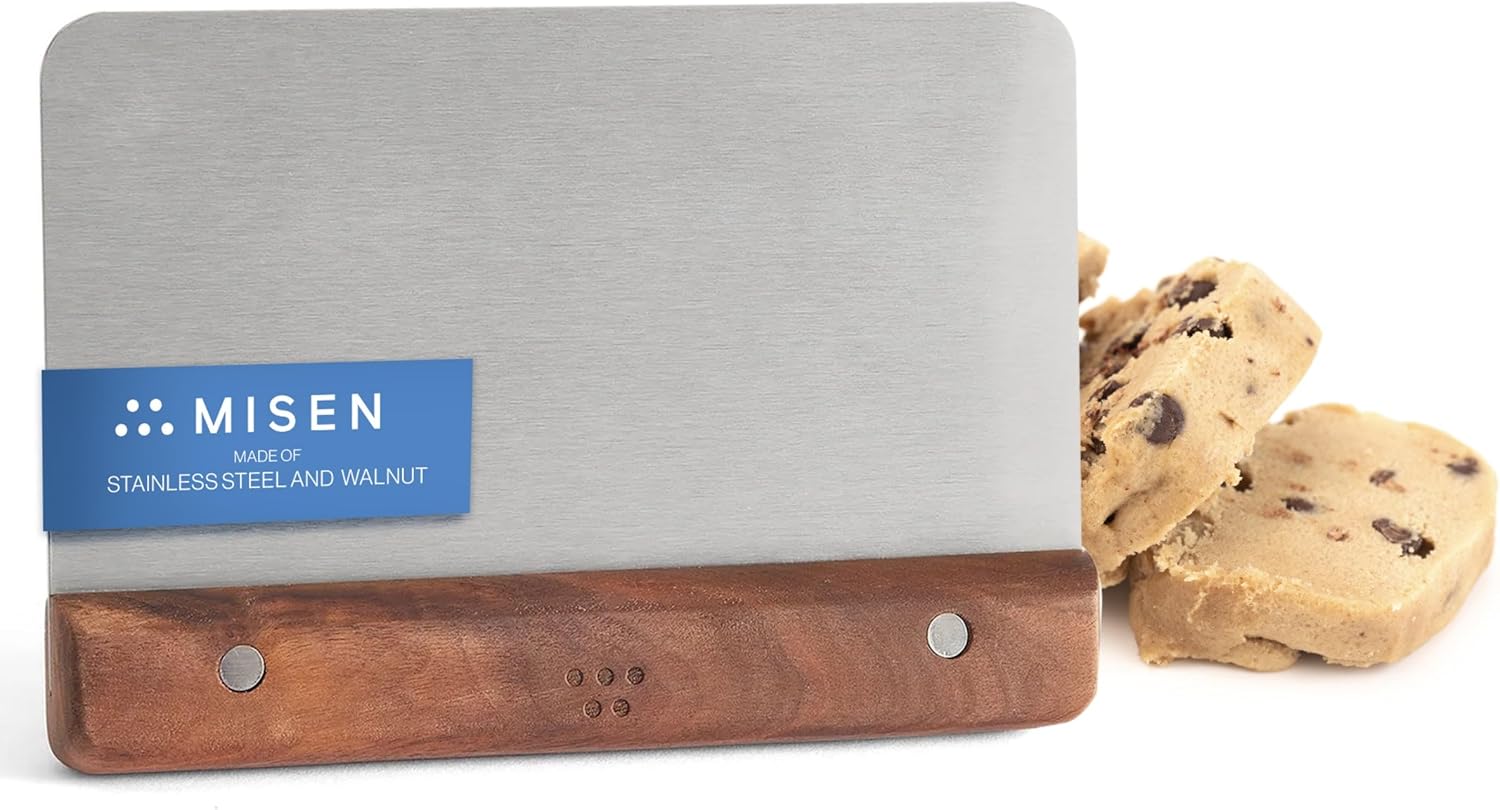
- Bench Scraper
- Proofing Box
- Bread Lame
Baker’s Schedule #1: Overnight Rise
Goal: Fresh sourdough rye bread by late morning or afternoon
Best For: Those who want to prep in the evening and bake the next day
DAY 1 (Evening)
- 7:00 PM: Mix dough, knead until soft and stretchable
- 7:30 PM: Place in oiled bowl and let rise at warm room temp (5–7 hours)
- 12:30 AM: Shape loaves, place in floured bannetons
- 1:00 AM: Refrigerate loaves overnight for final rise
DAY 2 (Morning)
- 8:00 AM: Preheat Dutch oven at 250°C (500°F) for 1 hour
- 9:00 AM: Score and bake (20 mins covered, 15–20 mins uncovered)
- 9:45 AM: Cool on wire rack and enjoy
Baker’s Schedule #2: Same-Day Bake
Goal: Fresh sourdough rye bread by dinnertime
Best For: Bakers with a full day at home
DAY 1 (Morning)
- 8:00 AM: Mix dough and knead
- 8:30 AM: Begin bulk fermentation in warm spot (5–7 hours)
- 2:00 PM: Shape loaves, place in floured bannetons
- 2:30 PM: Refrigerate for 3–4 hours or proof at room temp until ready
DAY 1 (Evening)
- 6:30 PM: Preheat Dutch oven at 250°C (500°F) for 1 hour
- 7:30 PM: Score and bake (20 mins covered, 15–20 mins uncovered)
- 8:15 PM: Cool on wire rack and enjoy by 9:00 PM
Instructions
- Mix all ingredients in the bowl of a standing mixer.
- With the dough hook attached, kneed for 10-15 minutes. You will know your dough is ready when it’s soft, supple & stretchable.
- Form into a smooth ball, and transfer to an oiled bowl & cover bowl with plastic wrap or damp towel.
- Let rise in a warm place – preferably a fermentation box, set to 27 degrees C (80 degrees F) for 5-7 hours.
- Check periodically to see how well the bread has risen.
- When the dough has doubled, turn it out onto a floured work surface.
- Divide into two using a dough scraper. Let the other half of the dough rest while you work the first.
- Fold the dough onto itself, then pull out the edges and fold them in. Lastly, spin the loaf towards you to create surface tension and final shape.
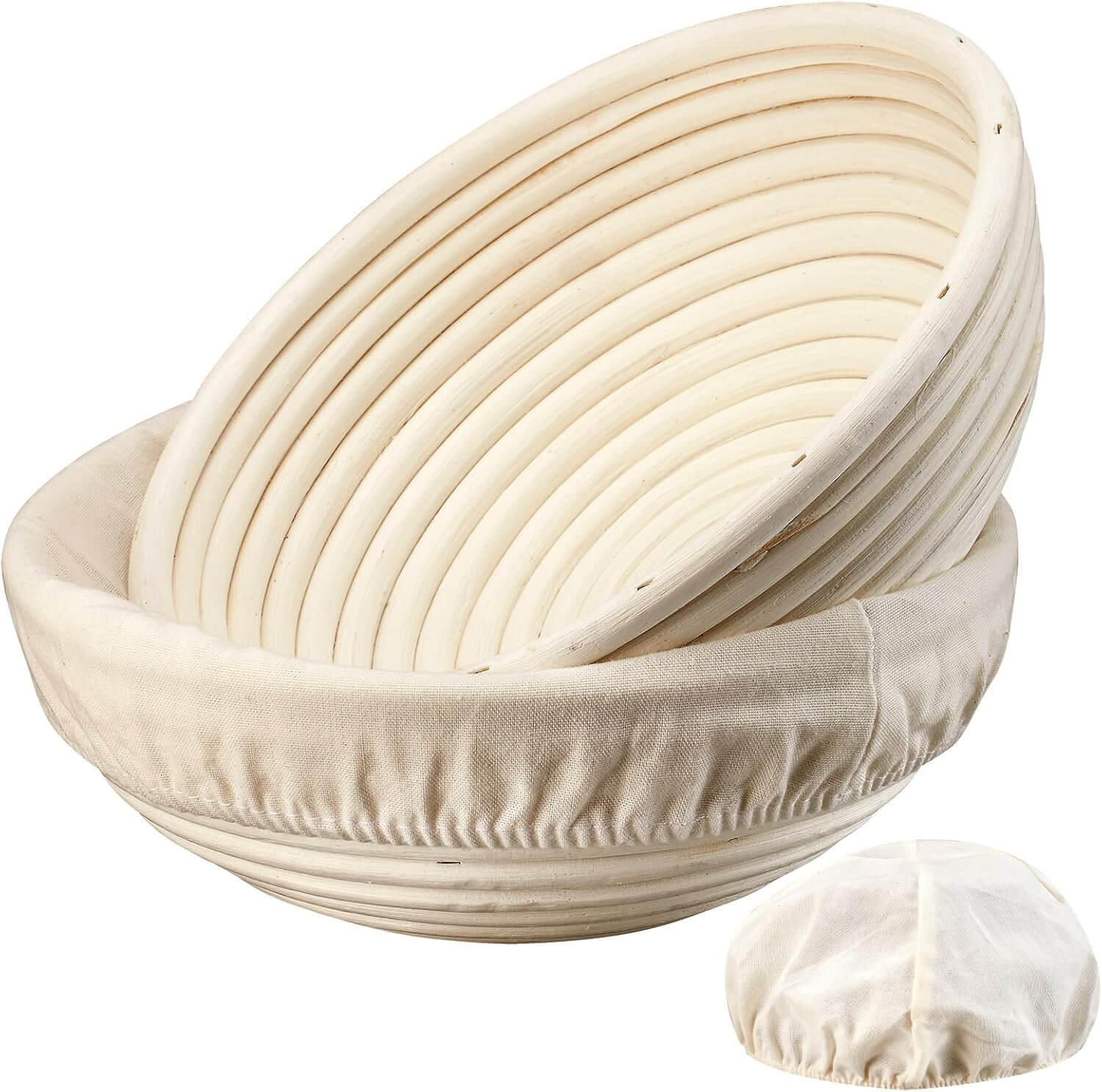
- Place in a floured banneton or proofing basket seam side up.
- Place the banneton basket with your dough inside into a big plastic bag, tie it off, and place it in the fridge for the final rise.
- Leave loaves in the fridge overnight.
- Next day, place your Dutch oven into the oven and preheat for an hour at 250C (500F).
- When the oven is preheated, turn one banneton basket out onto a large piece of parchment paper.
- Now the fun part! Score your sourdough loaf by cutting the top of the loaf using a sharp knife or bread lame.
- Carefully lift the baking parchment with your loaf and place it inside the preheated Dutch oven.
- Bake for 20 minutes with the lid on.
- Lower the temperature to 235C (450f), remove the lid, and bake for another 15-20mins uncovered.
- Carefully remove the Dutch oven from your oven, and using the baking parchment take the loaf out.
- Allow the fermented sourdough bread recipe to cool on a wire rack

Tips
- Starter Strength: Ensure your sourdough starter is active and bubbly, fed 6-8 hours before mixing. A float test (a spoonful floats in water) confirms it’s ready for a strong rise.
- Rye Flour Hydration: Rye flour absorbs more water than wheat, so the dough may feel stickier. Resist adding extra flour during kneading—aim for a soft, slightly tacky texture that holds shape.
- Warm Rise Control: Keep the bulk rise at 80°F (27°C) for 5-7 hours. If your kitchen is cooler, use a proofing box or place the bowl in an off oven with the light on to maintain warmth.
- Gentle Shaping: Rye dough is less elastic than wheat, so handle it gently during shaping to avoid deflating. Focus on creating tension without overworking the dough.
- Scoring Depth: Score rye bread deeply (1/2 inch) to allow proper expansion, as rye dough is denser. Simple slashes or a cross pattern work well for even baking.
- Crisp Crust: For a crunchier crust, spritz the dough with water before placing it in the Dutch oven, and ensure the oven is fully preheated to 500°F (250°C).
- Cooling Time: Let the bread cool for at least 1-2 hours before slicing. Rye bread retains moisture longer, and cutting too soon can result in a gummy crumb.

Storage

FAQs
Easy Sourdough Rye Bread Recipe

Bake flavorful sourdough rye bread with this easy recipe. Perfect with salmon or soup, it’s dense yet balanced with rye and wheat flour!
Ingredients
- 475g rye bread flour
- 475g wheat bread flour
- 500g filterest water
- 3 tbs (20g) salt
- 200g active sourdough starter
- splash of olive oil (for oiling your bowl)
Instructions
- Mix all ingredients in the bowl of a standing mixer.
- With the dough hook attached, kneed for 10-15 minutes. You will know your dough is ready when it’s soft, supple & stretchable.
- Form into a smooth ball, and transfer to an oiled bowl & cover bowl with plastic wrap or damp towel.
- Let rise in a warm place – preferably a fermentation box, set to 27 degrees C (80 degrees F) for 5-7 hours.
- Check periodically to see how well the bread has risen.
- When the dough has doubled, turn it out onto a floured work surface.
- Divide into two using a dough scraper. Let the other half of the dough rest while you work the first.
- Fold the dough onto itself, then pull out the edges and fold them in. Lastly, spin the loaf towards you to create surface tension and final shape.
- Place in a floured banneton or proofing basket seam side up.
- Place the banneton basket with your dough inside into a big plastic bag, tie it off, and place it in the fridge for the final rise.
- Leave loaves in the fridge overnight.
- Next day, place your Dutch oven into the oven and preheat for an hour at 250C (500F).
- When the oven is preheated, turn one banneton basket out onto a large piece of parchment paper.
- Now the fun part! Score your sourdough loaf by cutting the top of the loaf using a sharp knife or bread lame.
- Carefully lift the baking parchment with your loaf and place it inside the preheated Dutch oven.
- Bake for 20 minutes with the lid on.
- Lower the temperature to 235C (450f), remove the lid, and bake for another 15-20mins uncovered.
- Carefully remove the Dutch oven from your oven, and using the baking parchment take the loaf out.
- Allow the sourdough bread to cool on a wire rack
Notes
Tips
- Starter Strength: Ensure your sourdough starter is active and bubbly, fed 6-8 hours before mixing. A float test (a spoonful floats in water) confirms it’s ready for a strong rise.
- Rye Flour Hydration: Rye flour absorbs more water than wheat, so the dough may feel stickier. Resist adding extra flour during kneading—aim for a soft, slightly tacky texture that holds shape.
- Warm Rise Control: Keep the bulk rise at 80°F (27°C) for 5-7 hours. If your kitchen is cooler, use a proofing box or place the bowl in an off oven with the light on to maintain warmth.
- Gentle Shaping: Rye dough is less elastic than wheat, so handle it gently during shaping to avoid deflating. Focus on creating tension without overworking the dough.
- Scoring Depth: Score rye bread deeply (1/2 inch) to allow proper expansion, as rye dough is denser. Simple slashes or a cross pattern work well for even baking.
- Crisp Crust: For a crunchier crust, spritz the dough with water before placing it in the Dutch oven, and ensure the oven is fully preheated to 500°F (250°C).
- Cooling Time: Let the bread cool for at least 1-2 hours before slicing. Rye bread retains moisture longer, and cutting too soon can result in a gummy crumb.
Storage
Room Temperature: Store cooled sourdough rye bread in a cloth bag or wrapped in a clean kitchen towel at room temperature for up to 4 days. The rye flour helps it stay moist longer than wheat bread. You can also try a beeswax wrap - my new favorite!
Refrigerator: Place in an airtight container or resealable bag and refrigerate for up to 10 days. This preserves the dense crumb, though the crust may soften. Slice before storing for easy use.
Freezer: Freeze for up to 3 months. Slice the loaf first, wrap each slice tightly in plastic wrap, and store in a freezer-safe bag. Whole loaves can be wrapped in plastic and foil to prevent freezer burn.
Reheating:
- From Room Temperature or Refrigerator: Preheat the oven to 325°F (160°C). Place slices or the whole loaf on a baking sheet and warm for 5-10 minutes to refresh the crust. For a softer texture, wrap in foil. Microwaving (15-20 seconds per slice) works but may soften the crust.
- From Freezer: Thaw slices at room temperature for 30-60 minutes or overnight in the fridge. Reheat in a 325°F (160°C) oven for 8-12 minutes, unwrapped, to restore crispness. Whole loaves may need 15-20 minutes after thawing.
Recommended Products
As an Amazon Associate and member of other affiliate programs, I earn from qualifying purchases.

Nutrition Information:
Yield:
12Serving Size:
1Amount Per Serving: Calories: 326Total Fat: 3gSaturated Fat: 1gTrans Fat: 0gUnsaturated Fat: 2gCholesterol: 0mgSodium: 204mgCarbohydrates: 62gFiber: 3gSugar: 3gProtein: 11g